


Pope Francis Death on Easter Monday

Pope Francis Death on Easter Monday
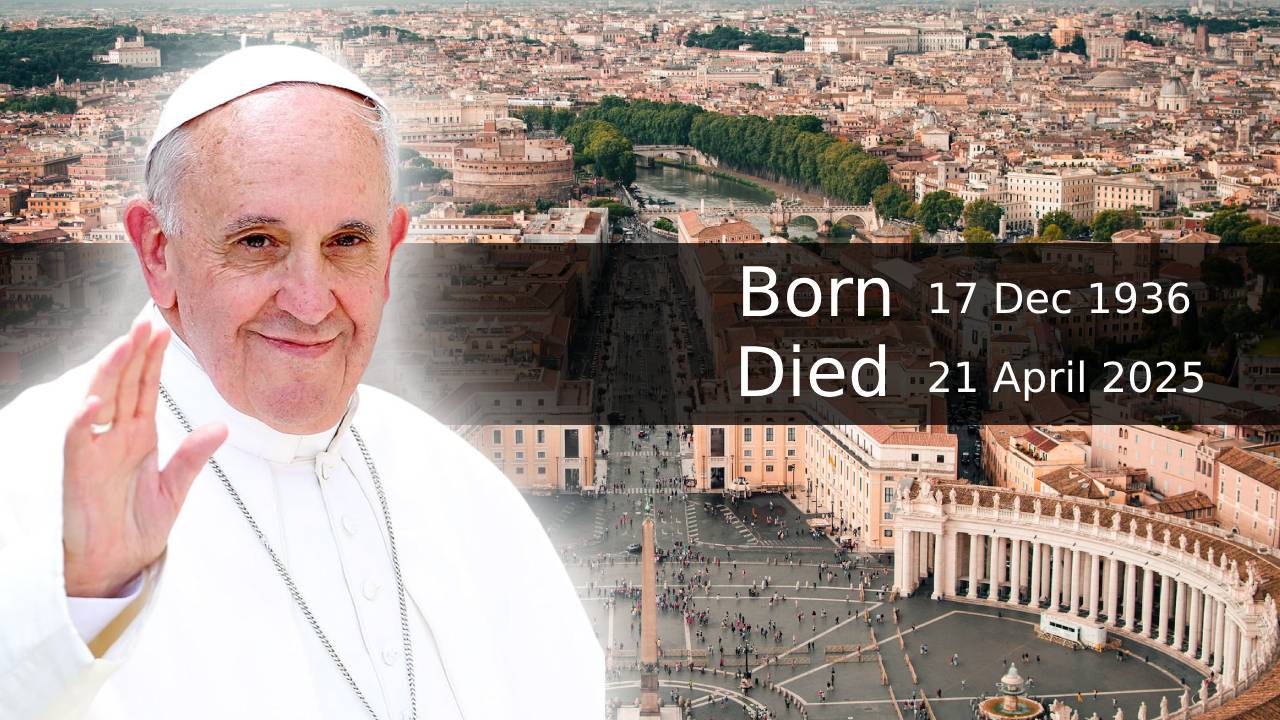
A Quiet Morning in Rome: News That Shook the World
On Easter Monday, April 21, 2025, the world awoke to solemn news from the heart of the Vatican. At 88 years old, Pope Francis passed away in the quiet of his residence at the Casa Santa Marta. The announcement, made by Cardinal Kevin Farrell, Camerlengo of the Holy Roman Church, echoed through St. Peter’s Square and around the globe.
"At 7:35 this morning, the Bishop of Rome, Francis, returned to the house of the Father,” Farrell proclaimed. “His entire life was dedicated to the service of the Lord and of His Church." With these words, the world officially entered a new chapter—one marked by reflection, remembrance, and collective mourning over the pope francis death.
Final Days of the Pontiff
The pope’s health had been in noticeable decline for some time. On February 14, 2025, he was admitted to the Agostino Gemelli Polyclinic Hospital after suffering from bronchitis. A few days later, on February 18, doctors confirmed he had bilateral pneumonia, a condition that further strained his already weakened respiratory system.
It wasn’t the first time respiratory issues had troubled him. Decades earlier in 1957, long before he ascended to the papacy, Jorge Mario Bergoglio underwent lung surgery in Argentina. That early surgery marked a turning point in his health history, with recurring complications haunting him into old age.
By March 2025, his condition had slightly improved, allowing him to return to the Vatican. But by then, his physical state had already taken a toll. Despite a strong spirit and his continued attempts to carry out duties when possible, the final decline came swiftly in the days leading up to his passing.
A Symbolic Date for a Devoted Life
The pope francis death occurring on Easter Monday is deeply symbolic for the faithful. Easter, representing the resurrection of Christ, is the cornerstone of the Christian faith. That the pope’s final breath came just a day after Easter Sunday has been interpreted by many as a poignant spiritual sign—marking the end of a life lived in devotion to the very resurrection he preached.
In the Catholic tradition, such timing is not merely coincidental. For many, it reinforced the image of Francis not just as a religious leader but as a man deeply intertwined with the Gospel he lived out in both word and action.
Vatican Funeral Arrangements Underway
Following the pope francis death, Vatican officials moved swiftly to begin preparations for the funeral. According to the Director of the Holy See Press Office, Matteo Bruni, the Pope’s body is expected to be transferred to St. Peter's Basilica on Wednesday, April 23. There, members of the public will be allowed to gather and offer prayers before his mortal remains.
The details of the funeral will follow the newly updated Ordo Exsequiarum Romani Pontificis—the second edition of the official liturgical text for papal funerals. This revision was approved by Pope Francis himself in April 2024. It reflects a more modest and pastorally-focused ceremony, per his own wishes.
One of the notable changes in this updated rite is the immediate placement of the body into the coffin after the declaration of death, a deviation from traditional delay practices. The chapel, rather than the room of death, becomes the site for the official confirmation of death, maintaining reverence and sacred decorum.
Archbishop Diego Ravelli, the Vatican’s Master of Apostolic Ceremonies, revealed that Pope Francis specifically asked for a simplified funeral that would shift focus away from ceremony and instead highlight the faith in the Risen Christ. “This is a funeral not of a worldly figure,” Ravelli stated, “but of a shepherd and disciple of Christ.”
Global Reaction to Pope Francis Death
The pope francis death triggered an outpouring of grief and tribute from around the globe. Political leaders, faith communities, and everyday citizens responded with heartfelt messages. In Buenos Aires, his birthplace, the city declared three days of mourning. Candles lined church altars. Banners bearing his image fluttered in the breeze outside the cathedral where he once preached as a bishop.
Many leaders from other faith traditions also responded. Messages of unity and admiration arrived from Muslim, Jewish, Hindu, and Buddhist communities. They recalled his efforts to build interfaith bridges, highlighting his meetings with imams, rabbis, and monks throughout his tenure.
Even outside religious circles, tributes poured in. International figures acknowledged his efforts toward economic justice, environmental stewardship, and refugee advocacy. His influence was never confined solely to Vatican walls.
The Legacy Left Behind
More than a decade after becoming pope in 2013, Pope Francis left behind a complex, often transformative legacy. Known for his direct approach, preference for simplicity, and outspoken views on global issues, he was a figure of reform. His papacy emphasized outreach to society's most overlooked corners.
He pushed for environmental responsibility with his 2015 encyclical Laudato Si’, calling for global action against climate change. He became a voice for the displaced and the marginalized, often visiting refugee camps and speaking out on the challenges facing migrants.
But perhaps his most enduring mark was his leadership style. He declined opulent accommodations in favor of a simple apartment at Casa Santa Marta. He regularly met with the poor, washed the feet of prisoners during Holy Week, and used his platform to encourage dialogue in an often-polarized world.
The pope francis death may have closed a chapter, but it also cemented his impact as a leader who redefined the papacy for the modern world.
What Happens Next
With the pope francis death officially confirmed, the Vatican enters a period known as Sede Vacante—the seat being vacant. During this time, all major decisions are suspended, and the daily operations of the Vatican are managed by the Camerlengo.
The College of Cardinals will soon convene in a conclave to elect a new pope. That process is expected to begin shortly after the funeral rites. Speculation has already begun about who may succeed Francis, but the Church's official stance is one of prayer and contemplation until the selection is complete.
A Humble Departure
From his first moments on the papal balcony in 2013, Pope Francis made it clear that he would lead with humility and compassion. His papacy was not without controversy, but it was undeniably rooted in the people. His way of challenging tradition, while maintaining doctrinal foundations, created a space for many who had felt distant from the Church to find a way back.
Now, as preparations begin to lay him to rest, the world reflects on the meaning of his journey. The pope francis death is more than the passing of a religious leader—it’s the end of a unique era in modern Church history.
And while his voice may now be silent, the echoes of his message—of mercy, dignity, and presence among the people—will resonate far beyond the Vatican walls for generations to come.

Start Growing Your Business With Us

Gurjoban Bajwa
“I had some issues but Jai from management reached to me and promptly resolved the issue.."

Breanne Butler
“We’re very happy with Convirzon. They seem to work in the way that we do, and we have a close collaboration with them. Every day we talk to the developers and outline what needs to be done with our business promotion which help us alots.."

Henrik Loop
“The best website company in Canada exceeded our expectations! Their expertise and attention to detail transformed our online presence, boosting traffic and conversions. Their oporation center is in India and Karan the Project Manager for our business who is highly knowledgeable. Highly recommend their services for anyone serious about digital success.."